
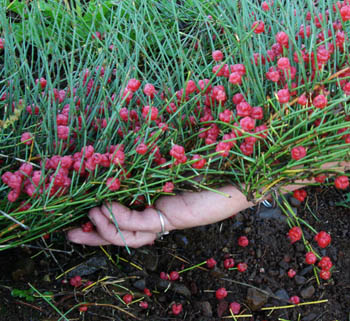
Ephedra Sinica Ma-huang (500 Grams Pouch)

$85.00
ephedra sinica for sale
Ephedra Sinica Ma-huang (500 Grams Pouch) for sale at affordable prices. We deliver the top-quality herbs and roots that you are looking for.
Ephedra sinica
Ephedra sinica belongs to the Ephedraceae family. Ephedra sinica has a long history in traditional Chinese medicine (approximately 5000 years), with uses in the treatment of allergies, nasal congestion, bronchial asthma, coughs, and flu. The drug is known under the name of “Ma-huang” which was traditionally obtained from the dry stems of Ephedra sinica. The plant contains many bioactive components such as alkaloids, i.e., ephedrine, pseudoephedrine (isoephedrine), nor-pseudoephedrine (cathine), nor-ephedrine, methyl ephedrine, methyl pseudoephedrine, tannins, and other constituents, including quinoline and 6-hydroxy kynurenic acid (Friedrich and Wiedemeyer, 1976; Cui et al., 1991; Caveney and Starratt, 1994). The phenolic compounds isolated from Ephedra exhibit substantial antimicrobial activity against Pseudomonas aeruginosa, a gram-negative bacterium, Staphylococcus aureus, a gram-positive bacterium, and Aspergillus niger, a fungus (Khan et al., 2017). From the n-BuOH-soluble fraction of the EtOH extracts from E. sinica, 12 A-type proanthocyanidins are isolated and identified. These compounds are tested by measuring the minimum inhibitory concentrations (MIC) against bacteria (both gram-positive and gram-negative) and fungi, with a concentration range of 0.00515–1.38 mmol/L (Zang et al., 2013) (Fig. 4.3).
Ephedra sinica, also called ma huang, is a plant native to Asia, though it also grows in other areas around the world. It’s been used in Chinese medicine for thousands of years (1Trusted Source, 2Trusted Source).
While the plant contains multiple chemical compounds, the major effects of ephedra are likely caused by the molecule ephedrine (3Trusted Source).
Ephedrine exerts multiple effects within your body, such as increasing metabolic rate and fat burning (4Trusted Source, 5Trusted Source).
For these reasons, ephedrine has been studied for its ability to reduce body weight and body fat. In the past, it gained substantial popularity in weight loss supplements.
However, due to safety concerns, supplements containing specific types of compounds found in ephedra — called ephedrine alkaloids — have been banned in several countries, including the United States (1Trusted Source).
Be the first to review “Ephedra Sinica Ma-huang (500 Grams Pouch)”
Related products
Reviews
There are no reviews yet.